
In real battlefield scenarios, evacuating wounded soldiers remains a major challenge for troops. Sending soldiers on rescue missions can often mean exposing them to enemy fire.
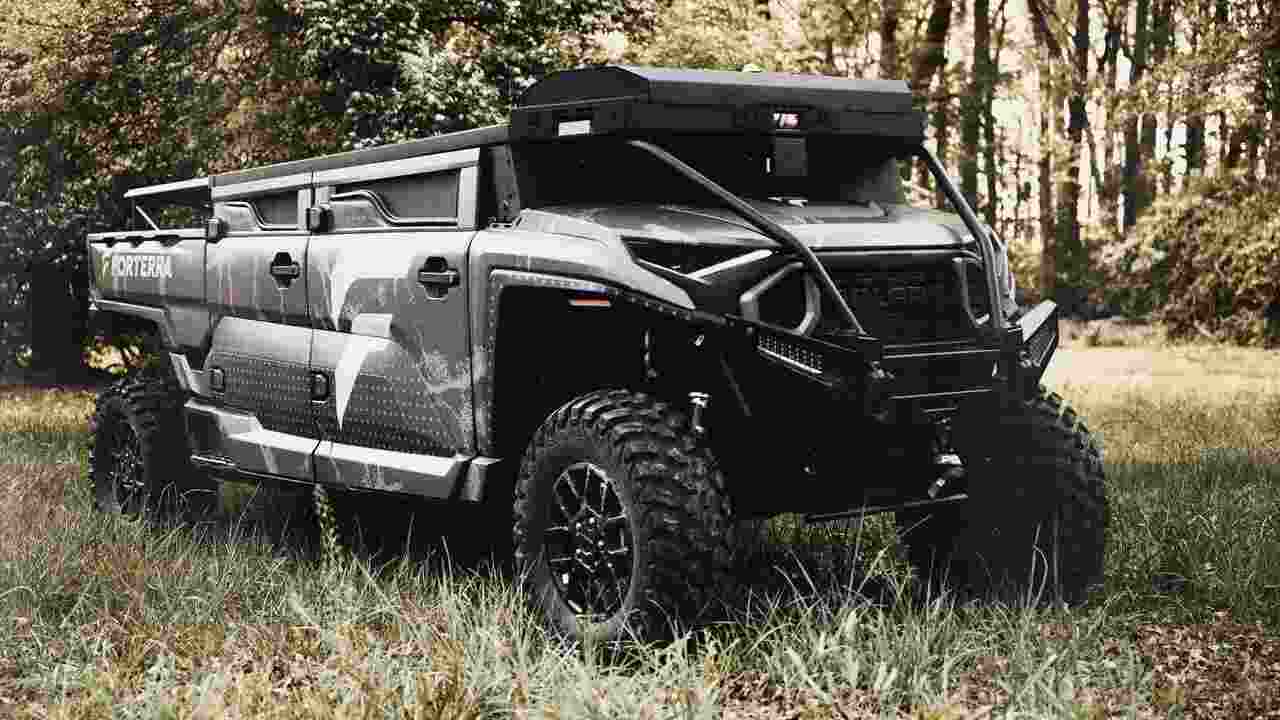
With this in mind, Polaris Defense, the military division of the vehicle manufacturer, and Forterra, a developer of autonomous vehicles, joined forces to create an autonomous casualty evacuation (CASEVAC) vehicle capable of crossing any terrain.
The MESA is built on the Polaris Ranger XD 1500, a more rugged platform than the standard Ranger. As a result, the vehicle offers a payload capacity of more than 900 kg and a flat deck that provides a wide range of battlefield possibilities, including CASEVAC operations, logistical support, heavy cargo transport, and much more.
“MESA integrates Forterra’s AutoDrive and Vektor mission modules into a scalable system that delivers mobility, computing, communications, and edge sensing along with the rugged Polaris vehicle platform,” said Forterra.
Above all, the MESA is an autonomous vehicle, allowing wounded personnel to be evacuated without putting a larger group of passengers at risk. “Our MESA vehicle brings together the key elements of autonomous mission execution and OEM manufacturing in a single deployable platform,” said Pat Acox, vice president of defense growth at Forterra.
“Because MESA is built in direct partnership with Polaris, every vehicle comes off the same market-leading production line that supplies Polaris platforms globally, with all modifications executed alongside the OEM. This results in a more rugged and fully integrated platform without aftermarket modifications to the base vehicle chassis.”
The MESA made its debut this week at Modern Day Marine, amid growing demand from the U.S. Armed Forces for “last-mile” medical evacuation solutions and unmanned ground vehicles.
+ Video: Passenger in autonomous Waymo taxi gets pulled over by police during ride
Photo: Forterra. This content was created with the help of AI and reviewed by the editorial team.
